
Kreativ-Tonie selbst gebaut
Meine "quasi Nichte" ist 3 Jahre alt geworden und ich wusste, dass Sie eine Toni-Box geschenkt bekam. Einige Zeit schon hatte ich mich gefragt, ob es möglich ist den Figuren und Geschichten eine etwas persönlichere Note zu verleihen.
Dass es herstellerseitig möglich war sog. Kreativ-Tonies mit eigenen Audiodateien zu "bespielen" war mir bekannt. Meinen Wunsch nach kreativem Ausdruck wurde das aber noch nicht gerecht.
Weil mich auch das Thema Photogrammetrie seit einiger Zeit beschäftigte, kam ich auf die Idee eine Figur von mir selbst ("Mini-Me") anzufertigen und dann mit einem eigens eingesprochenen Hörspiel zu verknüpfen.
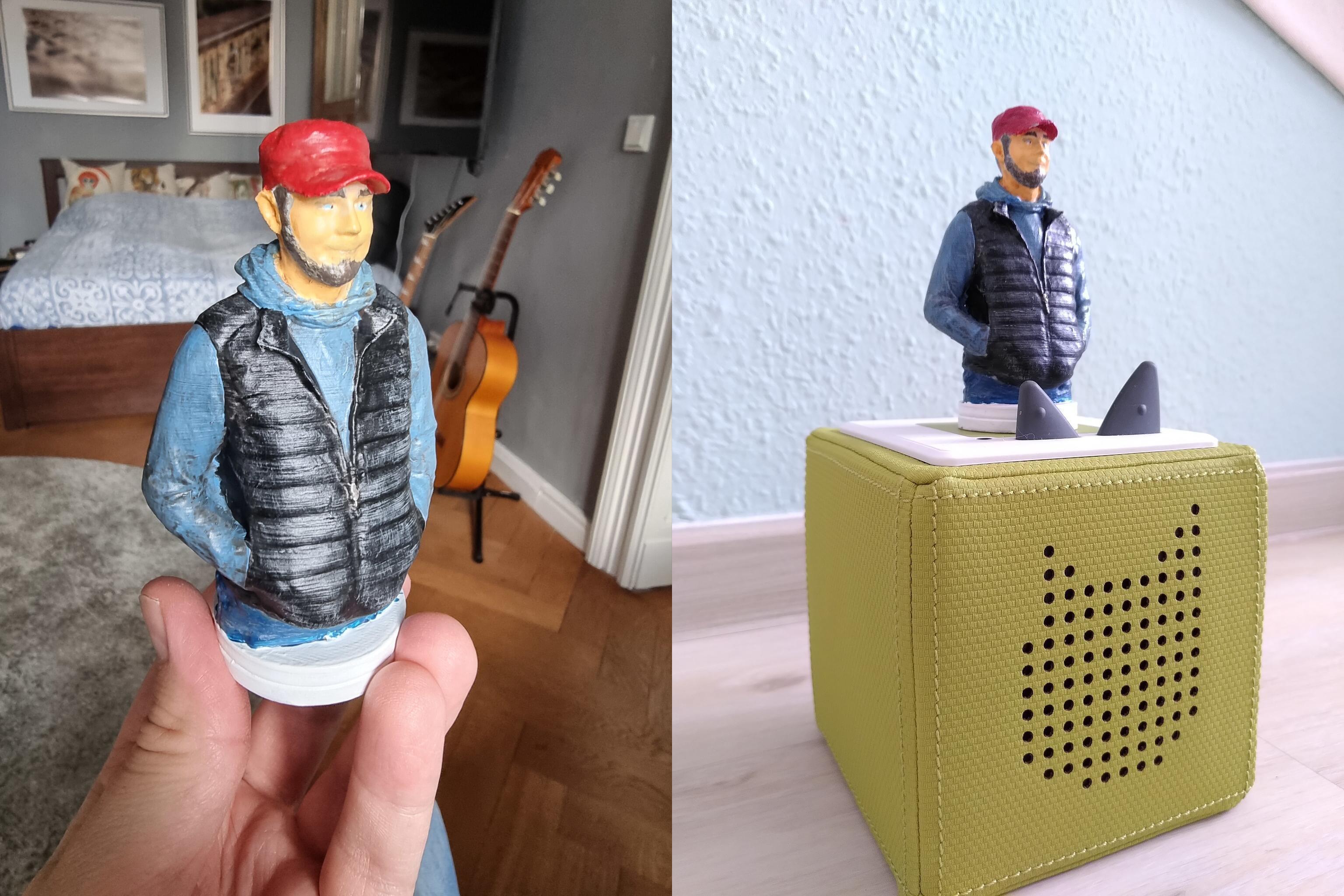

Ich betrachtete das Experiment als eine Art Hackathon. Bis zum Geburtstag blieb mir rund eine Woche Zeit. Es gab also eine feste Deadline, zu der das Ergebnis fertig sein musste. Folgende Schritte waren notwendig:
- finde heraus, wie der Chip einer Tonie-Figur funktioniert
- erstelle einen 3D-Scan von dir selbst
- überarbeite das 3D-Modell, damit es als Tonie-Figur verwendet werden kann
- drucke das 3D-Modell
- extrahiere den Chip aus einer Figur und implantiere ihn in das eigene Modell
- bemale das 3D-Modell
- erfinde eine eigene Geschichte
- spreche die Geschichte als Hörspiel ein
- finalisiere das Hörspiel im Schnittprogramm
Es bestand eine hohe Chance, dass ich an einem der Punkte scheitern könnte. Dennoch wollte ich das Projekt angehen. Die größten Unsicherheiten waren folgende:
- schaffe ich es einen Photogrammetrie-Scan am lebenden Objekt zu erstellen, der qualitativ ausreicht um damit eine ansehnliche Figur zu drucken, die mir im besten Fall sogar ähnlich sieht?
- schaffe ich es einen Chip aus einer Toniefigur zu extrahieren und in eine eigene zu transplantieren, sodass sie weiterhin fehlerfrei wie ein Kreativ-Tonie funktioniert?
- reicht meine Kreativität aus um eine kleine Kindergeschichte zu schreiben (danke an unsere Katze für die Inspiration)?
Photogrammetrie
Die größte Unsicherheit in Sachen Machbarkeit stellte für mich die Mini-Me Figur dar. Ich hatte vor einigen Jahren bereits mit Photogrammetrie experimentiert. Die nötige Nacharbeit der Punktwolken am Computer war damals aber relativ groß. Am Rande hatte ich das Thema immer wieder verfolgt und inzwischen gab es auch Apps für's Handy, die versprachen den Prozess zu vereinfachen (die offenen Fragen bezüglich des Datenschutzes der in die Cloud geladenen Fotos ignorierte ich aus Zeitmangel diesmal ausnahmsweise). Zum Einsatz kam die Photogrammetrie-App Polycam.
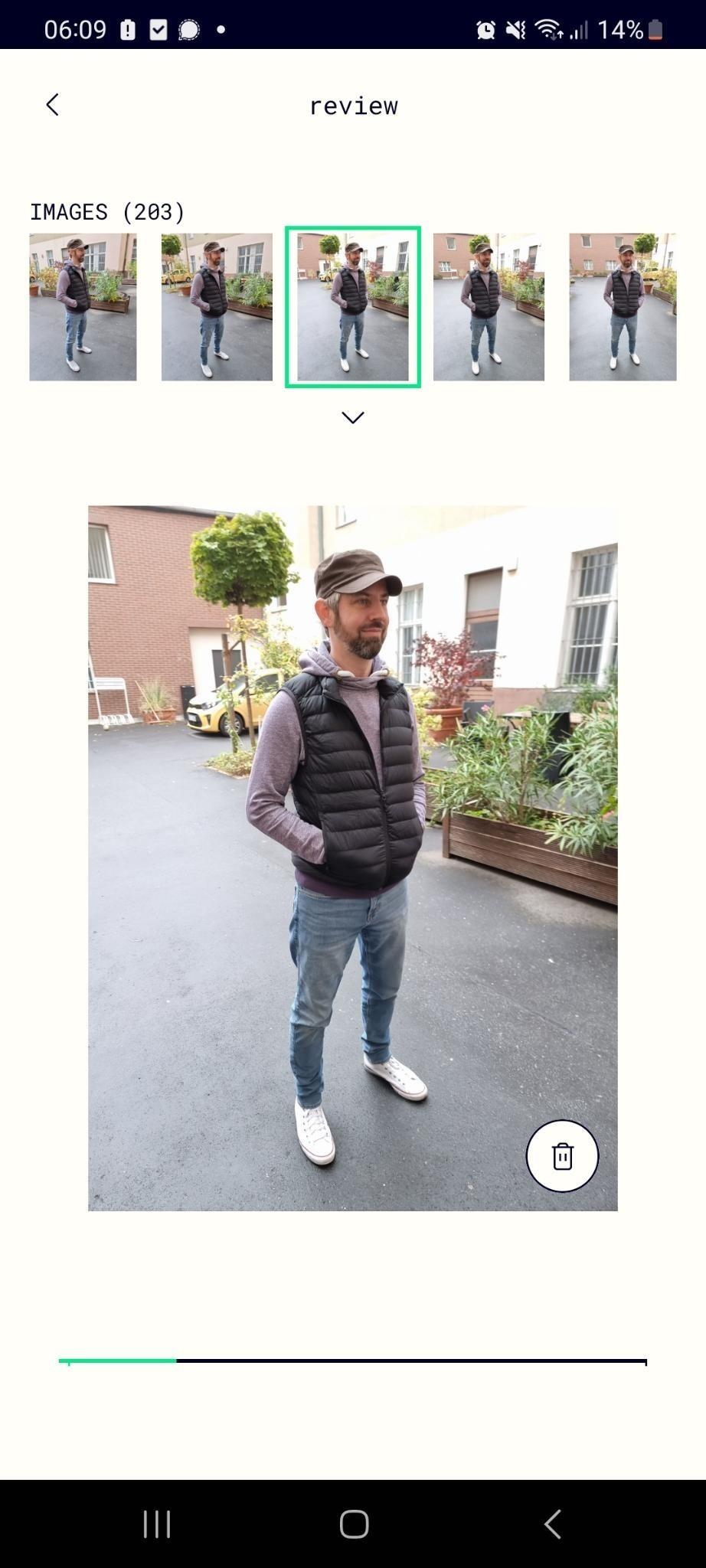
Mein Nachbar half mir beim anfertigen der Fotos. Insgesamt nahmen wir mit dem Handy 203 Fotos aus unterschiedlichen Winkeln auf. Ich musste eine Pose finden, in der ich etwa 5-10 Minuten komplett still stehen konnte. Mein Gesichtsausdruck sollte freundlich wirken, daher musste ich mein Lächeln 10 Minuten lang einfrieren.
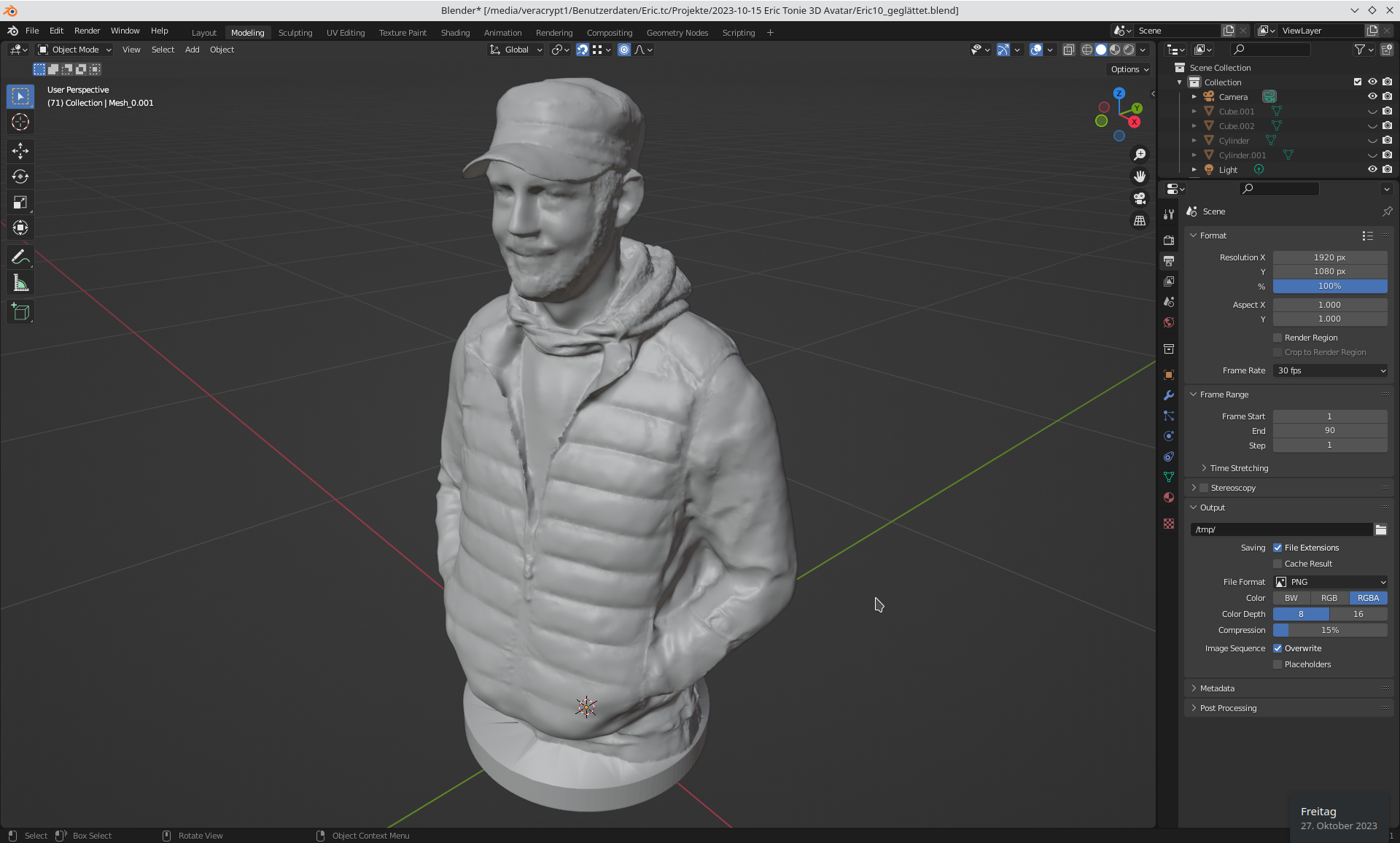
Das Ergebnis war besser als erhofft. Der Detailgrad des Objektes war überraschend gut. Es gab nur wenige Stellen, die nachträglich ausgebessert werden mussten. So hatte die Kopfbedeckung ein Loch, mein Kopf eine sonderbare Spitze und meine Ohren waren für den Druck zu dünn.
Nachharbeit der Photogrammetrie-Figur in Blender
Hilfreich war, dass ich die meisten Prozesse und Werkzeuge, die bei der 3D-Visualisierung zum Einsatz kommen, bereits kannte. Ich hatte früher viel Erfahrung mit verschiedenen 3D-Programmen gesammelt - seitdem waren aber gut 15 Jahre vergangen. Ich verwendete die Open Source Software Blender. Durch gezielte Suche in Google hatte ich schnell herausgefunden, wie man im Viewport navigiert und wie die Werkzeuge zu bedienen waren, die ich benötigte. Schnell hatte ich mich eingearbeitet und freute mich darauf mich wieder mit dem Thema 3D-Modellierung zu befassen.
Neben Ausbesserungsarbeiten und ein wenig Sculpting erhielt das 3D-Objekt noch einen Sockel und ich fräste einen Tunnel in den Körper, der später den NFC-Chip aufnehmen sollte.
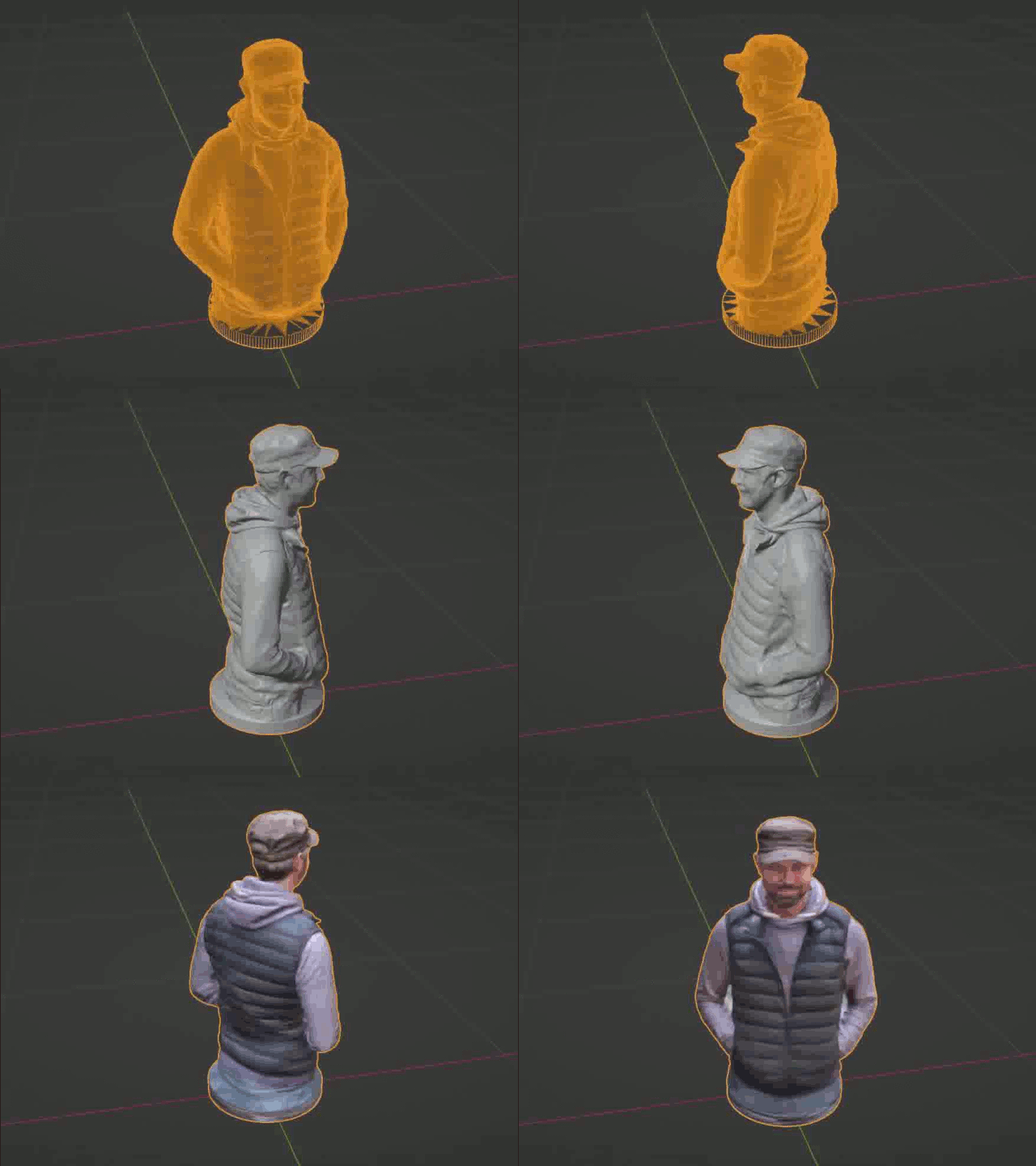
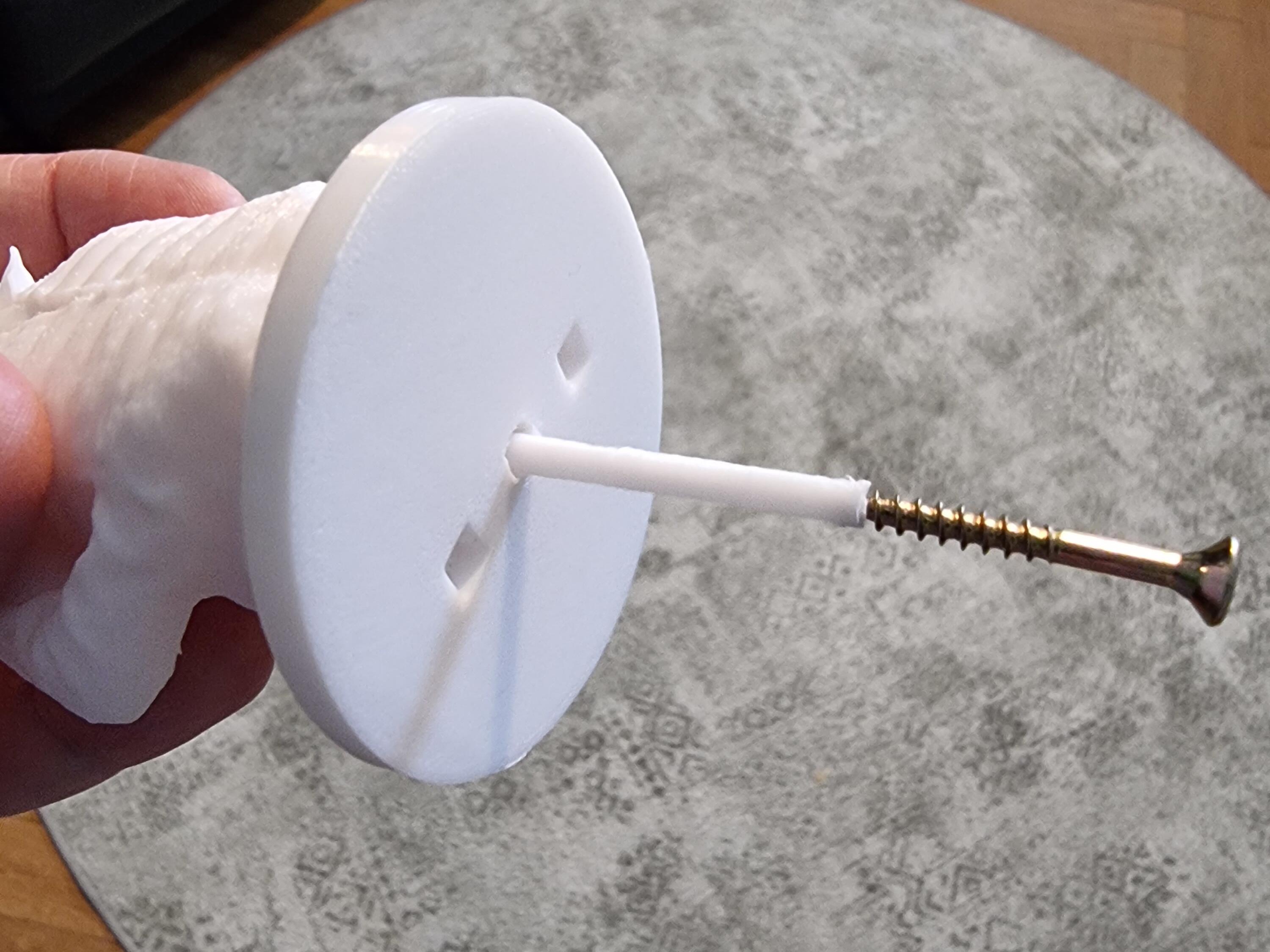
Zu diesem Zeitpunkt wusste ich noch nicht genau, in welcher Höhe sich der NFC-Chip befinden musste. Aus meinen Recherchen wusste ich aber, dass er sich nicht am Boden befinden darf. Außerdem müssen im Fuß der Figur zwei kleine Magneten eingebaut werden.
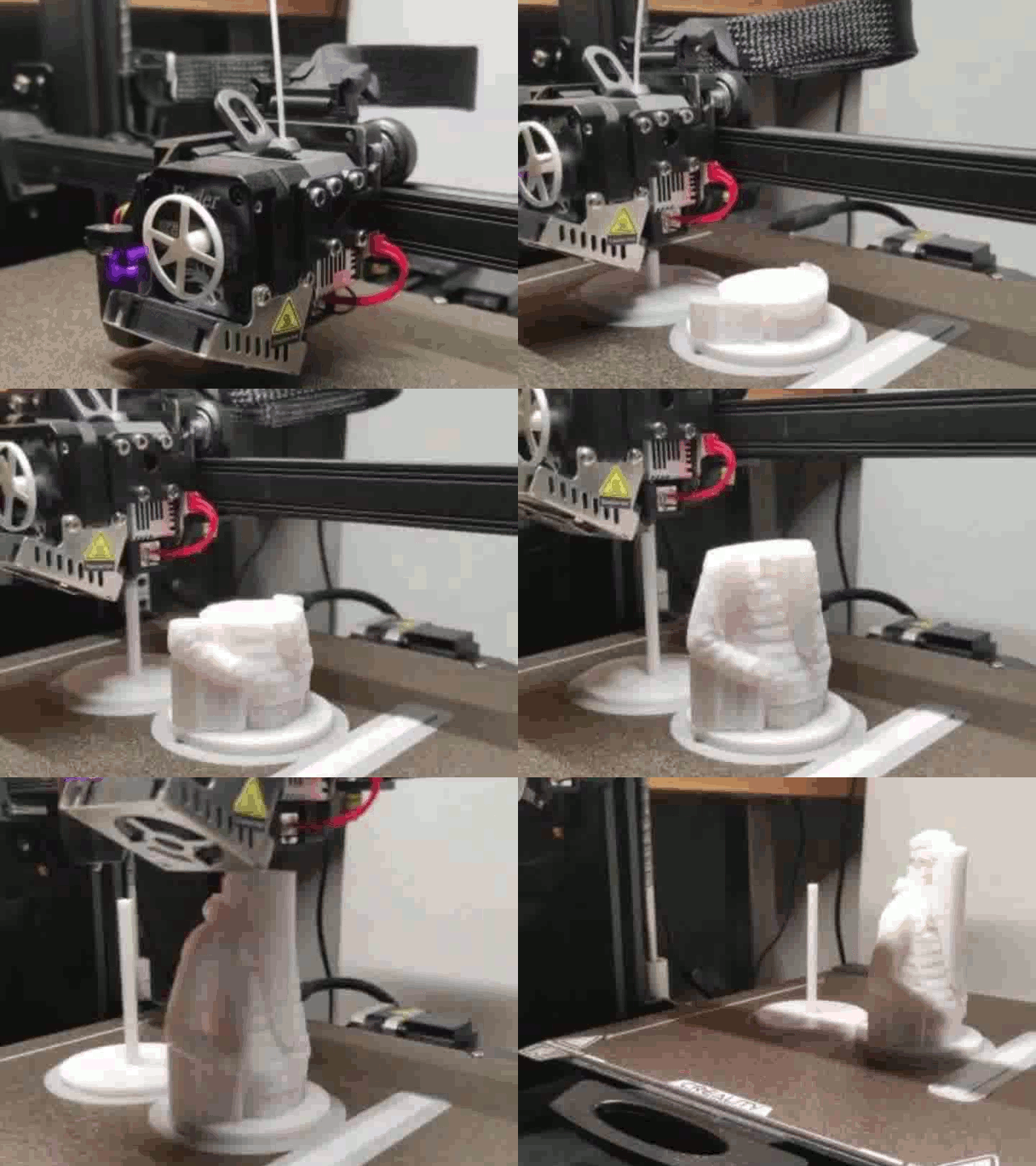
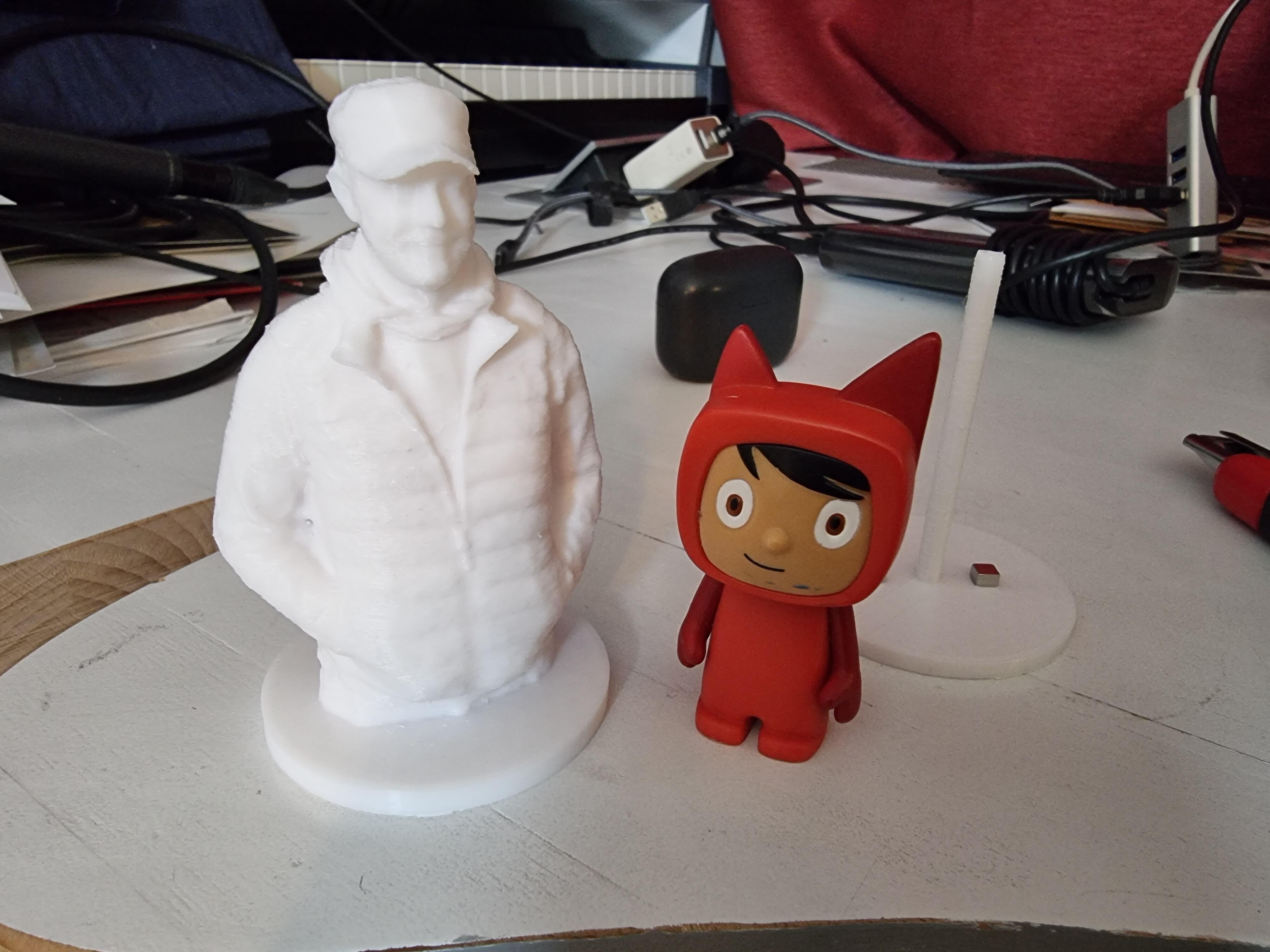
Auf dem 3D-Drucker meines Nachbarn ließen wir den ersten Prototypen drucken. Das Ergebnis war sehr überzeugend und ich war nun zuversichtlich, dass das komplette Unterfangen tatsächlich funktionieren könnte.
Kreativ-Tonie mit NFC-Chip wird zum Zauber-Tonie
Die Tonie-Figuren basieren auf einer simplen Technik. In den Figuren ist ein NFC-Chip verbaut (Near-Field-Communication). Der NFC-Chip ist eine simple Drahtspuhle, über die eine einzigartige ID (Nummer) kodiert ist. Ein Lesegerät, das sich in jedem modernen Handy befindet, kann theoretisch einen solchen NFC-Chip auslesen. Was damit dann passiert bleibt der Software überlassen. Im Falle der Tonie-Box wird die ID einer Figur von der Audio-Box gelesen. Mithilfe von WLAN fragt die Box dann in der Cloud des Anbieters, welche Audiodaten mit dieser ID verknüpft sind. Die Box läd dann die Datei herunter und spielt sie ab.
Ein in einer Figur verbauter NFC-Chip kostet wenige Cent. Man könnte also auf die Idee kommen einfach einen NFC-Chip zu kaufen und diesen mit der Box zu verknüpfen anstatt 15 Euro für eine offizielle Figur auszugeben, die man eigentlich nur wegen des eingebauten Chips benötigt und dann hinterher auf dem Müll landet. So einfach funktioniert das aber nicht. Jede Figur hat seine eigene, verschlüsselte ID, die im System des Herstellers registiert sein muss. Wenn die ID dem Hersteller nicht bekannt ist, dann kann man in der Cloud auch kein Audio damit verknüpfen.
Ich war überrascht, im Internet eine große Fan-Gemeinde zu finden, die solche Kreativ-Tonies im Backofen brütete um an die darin verbauten Chips zu gelangen. Teilweise ist es wohl nicht einfach den Chip unbeschadet von seinem Wirt zu befreien. Ich war daher dankbar eine Person auf einem Onlineportal zu finden, die sich die Arbeit bereits gemacht hatte und die freigelegten Chips direkt verkaufte. Anstatt selbst einen Tonie zu malträtieren bestellte ich also bei der privaten Anbieterin einen einzelnen Chip. Schade, dass der Hersteller die Chips nicht direkt auch ohne Figur verkauft. Offensichtlich gibt es viele Eltern, die sich kreativ austoben wollen.
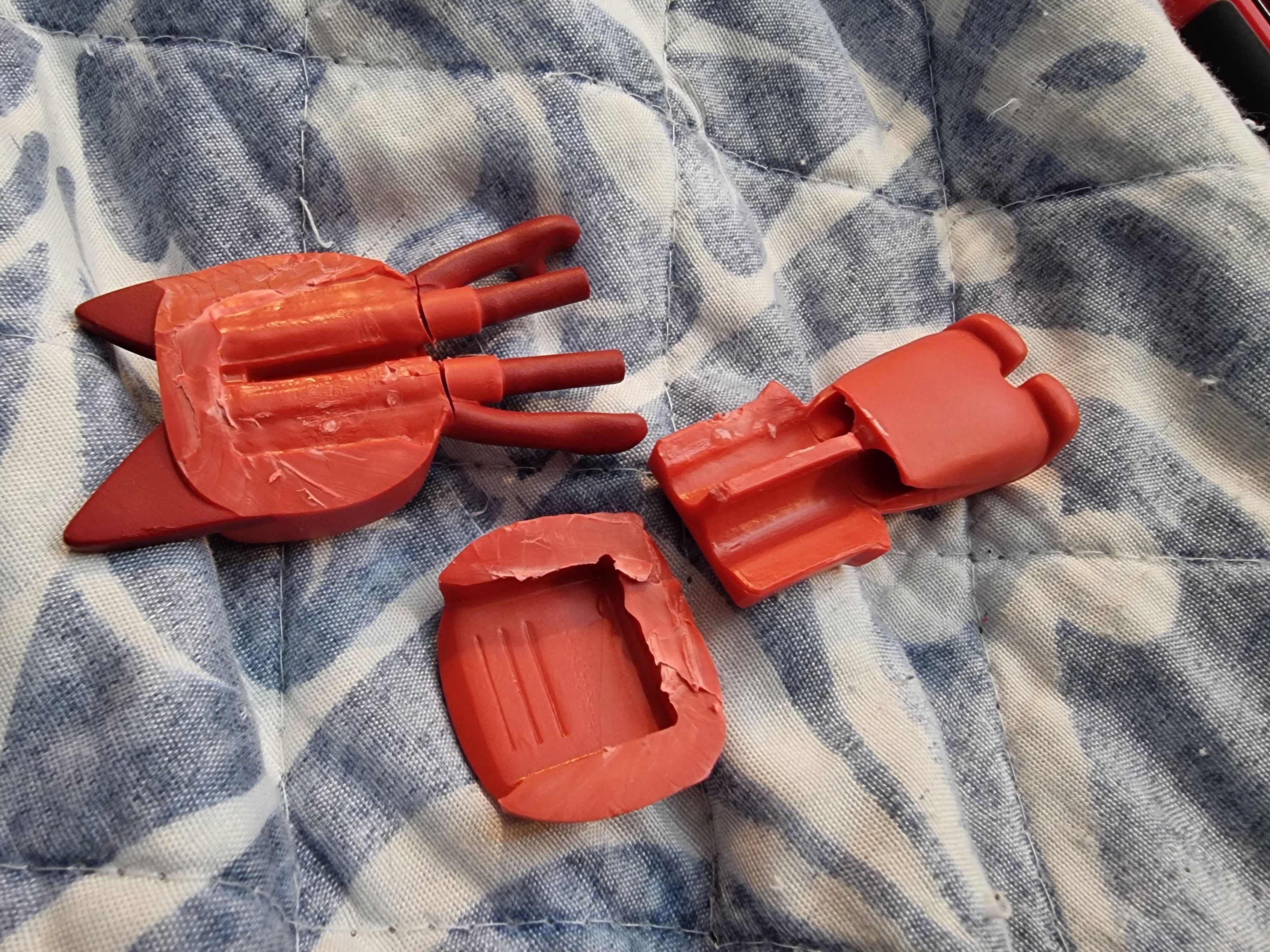
Leider dauerte der Versand länger als gedacht und ich befürchtete, dass der Chip nicht rechtzeitig ankommen würde und ich eventuell am Ende mit leeren Händen da stehen würde. Daher suchte ich mir eine Anbieterin in der nähe und kaufte mir einen gebrauchten Tonie, den ich direkt vor Ort abholen konnte. Leider wusste ich nicht wo genau sich der Chip innerhalb der Figur befand. Ich vermutete ihn zunächst im Körper und zerlegte sie entsprechend. Letztlich wurde ich aber hinter dem Gesicht fündig. Die hübsche Figur ist dabei leider meiner Ungeduld zum Opfer gefallen und wurde traurigerweise zu Plastikmüll.
Endlich hatte ich nun einen Chip und weil ich auch die zerstörte Figur dazu hatte, wusste ich, in welcher Höhe der Chip liegen musste. Schnell passte ich das 3D Objekt meines Mini-Mes so an, dass der Chip in der korrekten Höhe eingebracht werden konnte.
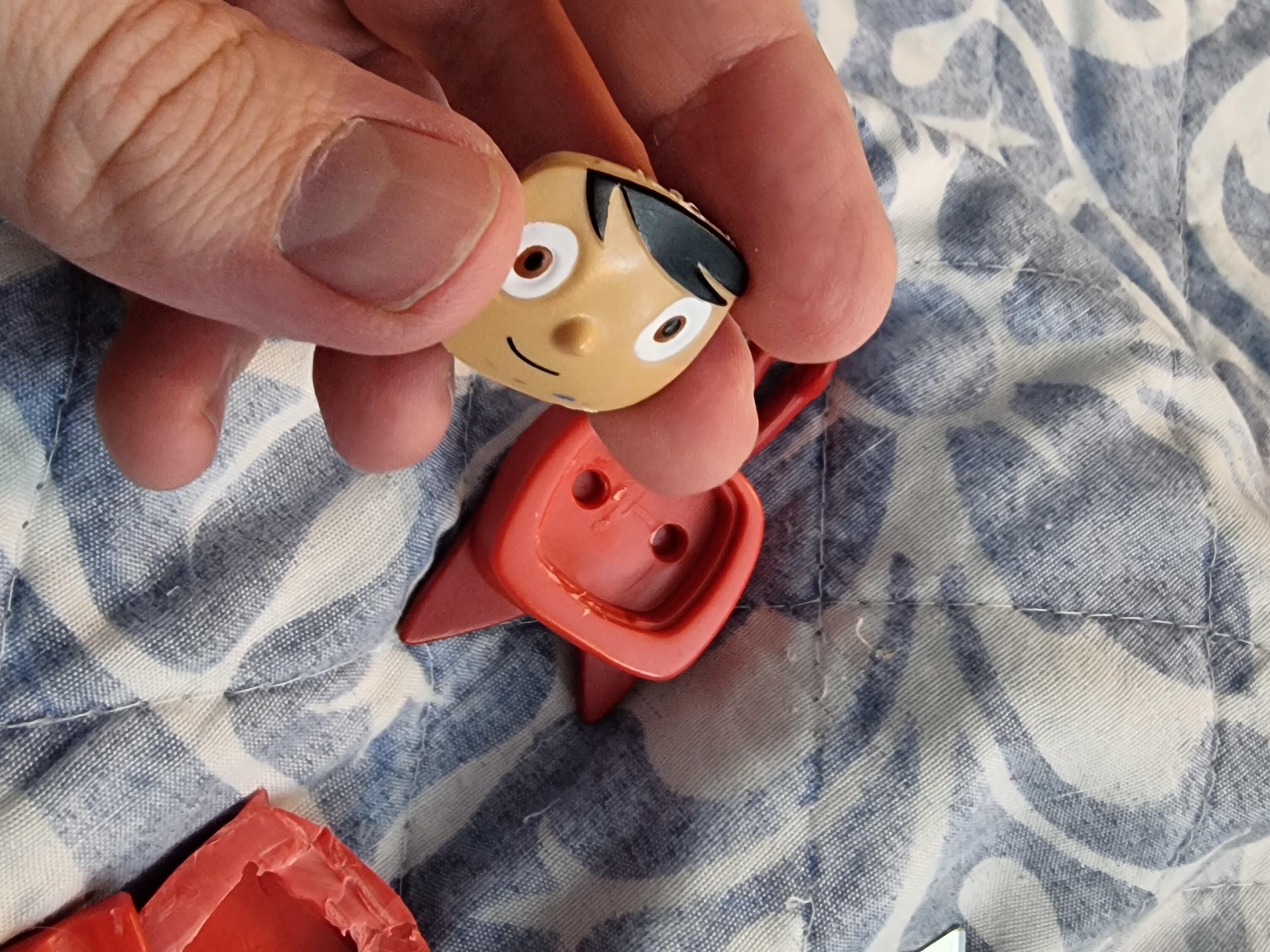
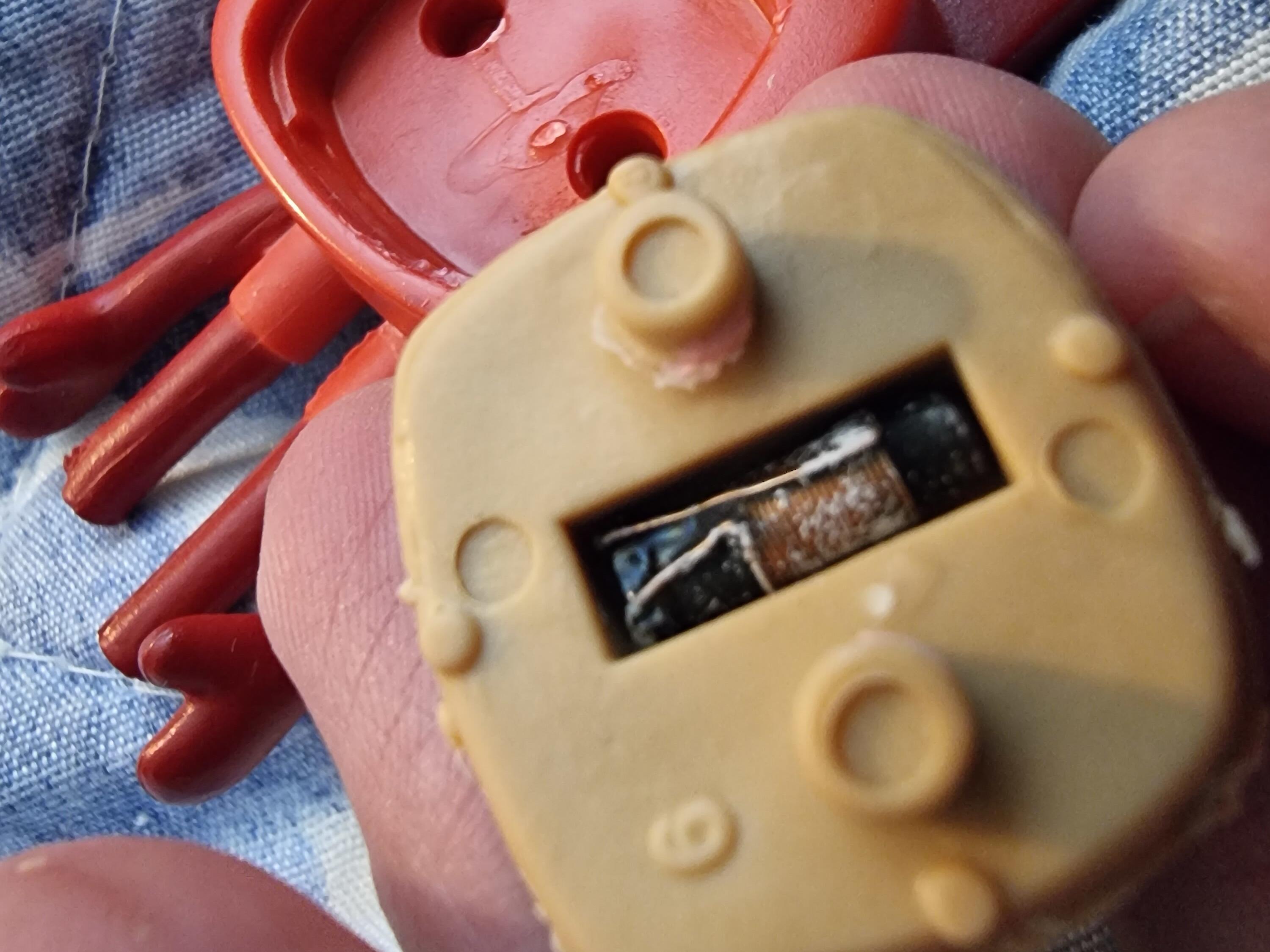
Das Hörspiel
Zuguter letzt fehlte mir eine Geschichte. Parallel zu allem anderen hatte ich bereits ein paar Ideen gesammelt. Schnell brachte ich die Geschichte zum Abschluss, was mir erstaunlich schnell von der Hand ging. Anschließend zauberte ich mein lange nicht verwendetes Mikrophon (Rode NTG2) aus dem Schrank hervor und hatte mit dem ersten Durchlauf bereits ein Ergebnis, mit dem ich zufrieden war. Mit der kostenlosen Software Audacity konnte ich ein paar Versprecher herausschneiden und noch einen Kompressor drüber legen – und fertig war das Hörspiel!
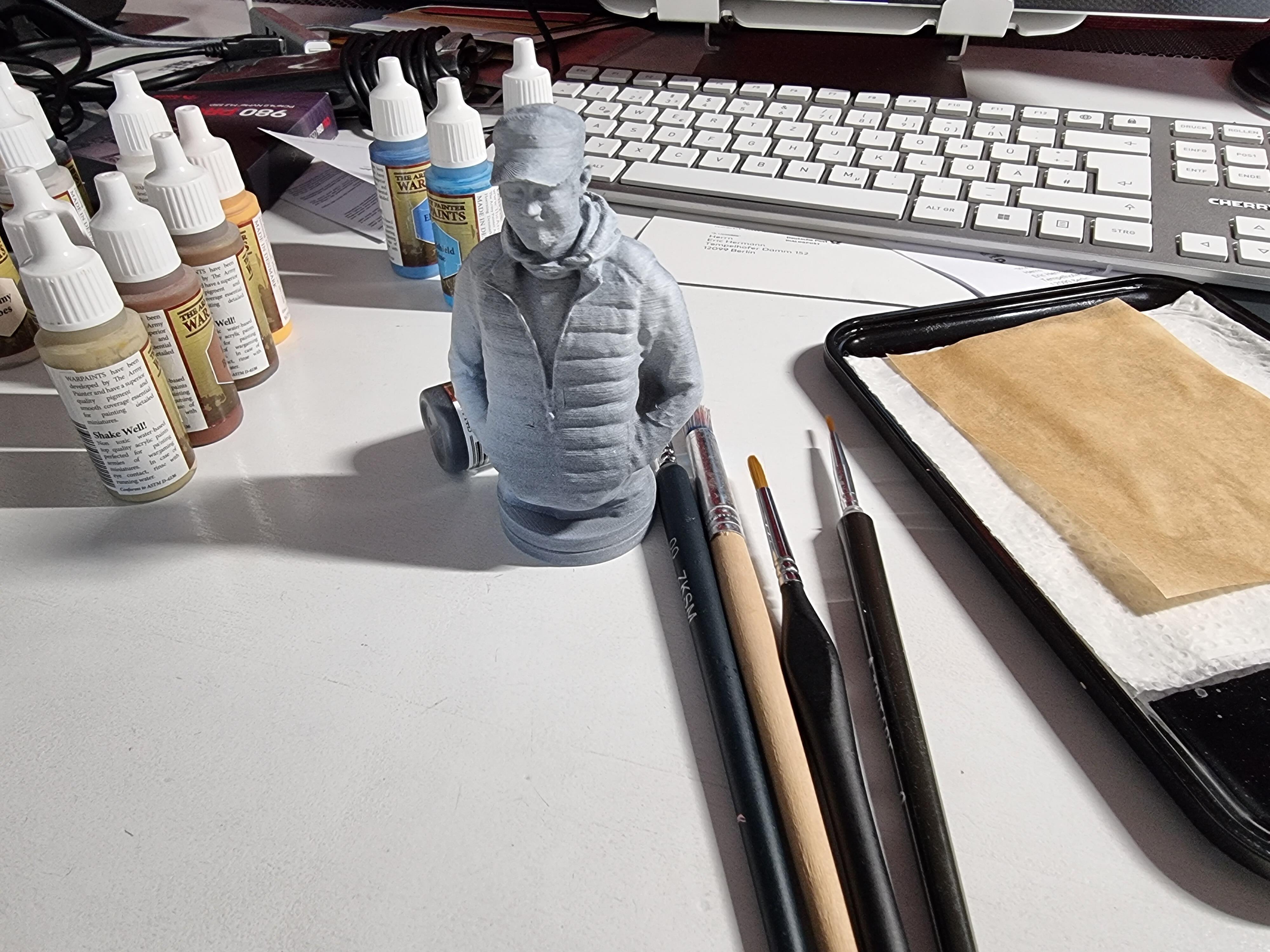
Für das Einmischen von Geräuschen blieb mir leider keine Zeit mehr. Schnell baute ich alle Teile zusammen und machte einen ersten Test. Es funktionierte einwandfrei. Die Tonie-Box erkannte meine Figur, wir konnten die Geschichte darauf laden und sie wurde abgespielt.
Mit Modellfarben bekam die Figur dann noch einen hübschen Anstrich, der über Nacht trockenen musste. Das Geschenk wurde gerade rechtzeitig fertig und war ein voller Erfolg.